StoryLocal news
Texas Closed Early Voting With 7.7 Million Ballots Cast, and the Markets Price a Split Ticket
Kalshi had Talarico's party at 74% for the Senate on November 2, 2026 while Polymarket had Abbott's at 61% for governor, so traders head into Election Day expecting Texas to split its two top races after 40.5% of registered voters already cast ballots.
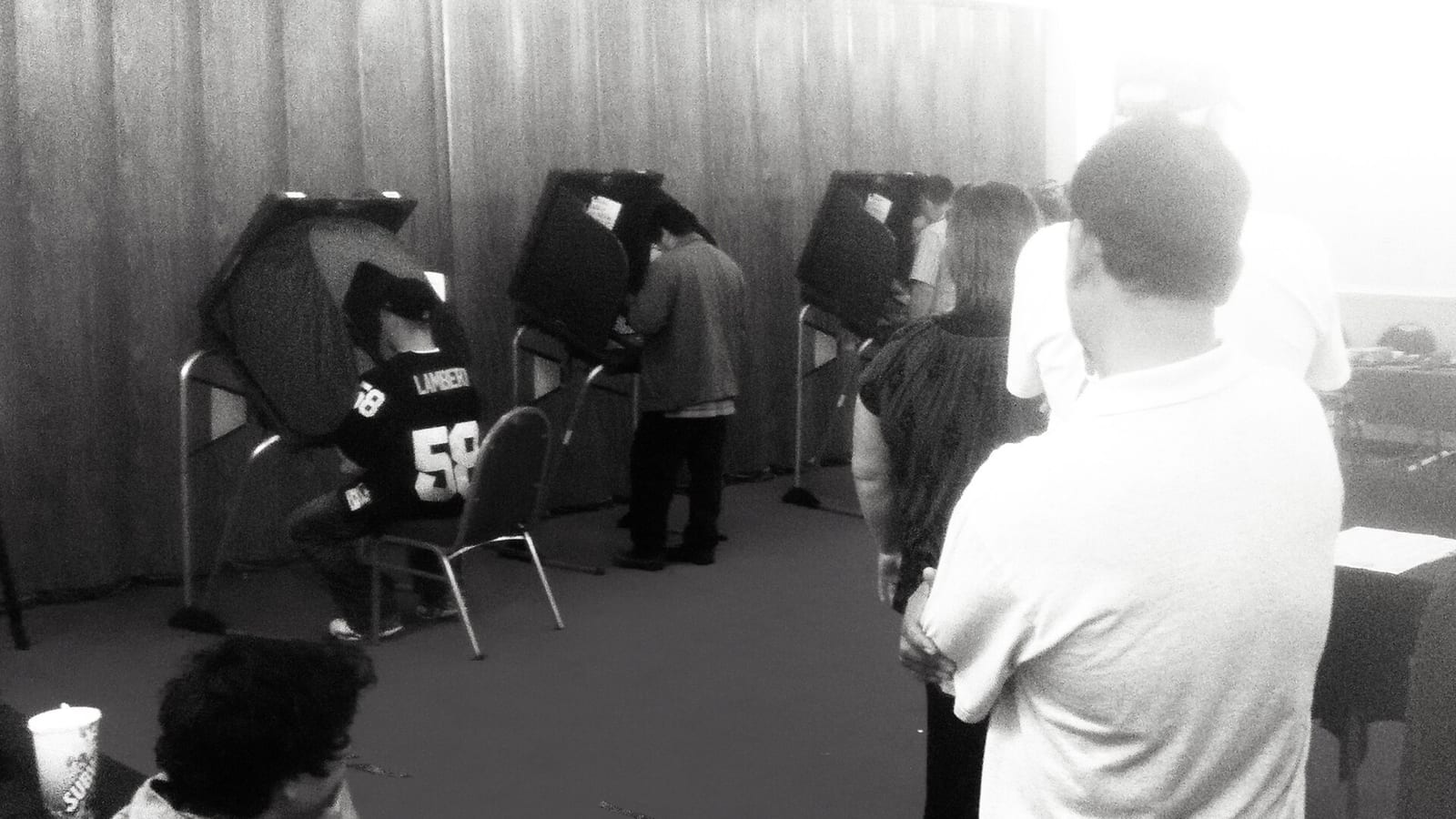
Texas early voting turnout for the 2026 general election finished at 7,718,734 ballots: 7,458,941 cast in person from Monday, October 19 through Friday, October 30, and 259,793 mail ballots received by October 30, according to the county-by-county tables the Texas Secretary of State updated on November 2, 2026. That is 40.54% of the state's 19,041,684 registered voters, cast before Election Day, Tuesday, November 3, 2026, and the last day was the busiest: 848,493 Texans voted in person on October 30, more than on any of the eleven days before it.
The markets on the two races at the top of the ballot pointed in different directions over the same twelve days. On November 2, 2026, Kalshi had the Democratic Party at 74% to win the U.S. Senate seat, with Polymarket at 76%, while Polymarket had the Republican Party at 61% to win the governor's race, with Kalshi at 62%. Read together, the two prices say traders expect Texas to send the Senate seat to James Talarico's party and the governor's office to Greg Abbott's, a split ticket on one ballot, and that read was set while four in ten registered voters were already casting theirs.
How Texas early voting turnout built over twelve days
The state's tables show a fast start, a steady middle and a final surge. In the November 2 update, 784,595 Texans voted in person on the first day, October 19, and 745,169 on the second. The pace eased through the first week, held between 518,904 on Saturday, October 24 and 701,241 on Friday, October 23, and fell to 268,457 on Sunday, October 25, the lowest day of the twelve. The second week ran between 549,489 and 590,653 a day from Monday through Thursday before the 848,493 of the last Friday.
Mail voting was a small share of the total. The 259,793 mail ballots received by October 30 were 3.4% of all early ballots, and more than 125,000 of them were already counted at the end of the first day. Mail ballots can still count after early voting closes: the Secretary of State's calendar for this election accepts a mail ballot received by 7 p.m. on November 3, or by 5 p.m. on Wednesday, November 4 if it is postmarked by 7 p.m. on Election Day. The mail figure in these tables is therefore not the final one.
The counts are the counties' own, and they move as counties report. Nine of the 254 counties, among them Bandera, Zavala and Terry, showed no in-person votes for October 30 in the November 2 update, so the statewide total can still change as counties report before the canvass. The earlier story on the first three days of voting used the tables as they stood on October 23; the same three days now count 2,370,949 ballots.
Where the early vote came from
The largest counties finished ahead of the rest of the state, and the gap opened as the two weeks went on. The fifteen counties with the most registered voters had 42.42% of their voters in by October 30, against 36.92% in the other 239 counties. After the first three days that gap had been less than a point, 12.74% against 11.90%, so the second week of early voting was a big-county week.
Harris County cast the most ballots of any county, 1,074,580, but at 39.1% of its 2,746,177 registered voters it finished below the statewide share. The highest shares among large counties were Williamson County at 49.3%, Collin at 48.2%, Travis at 48.0%, Tarrant at 47.8%, Denton at 47.2% and Fort Bend at 47.1%. Dallas County finished at 41.8% and Bexar at 39.6%. The lowest shares among counties with more than 100,000 registered voters were in El Paso and Webb counties, both at 30.6%, Cameron at 32.8%, and Bell and Nueces at 33.8%; Hidalgo finished at 35.6%.
Those figures say who has voted, by county, and nothing more. The Secretary of State's tables count ballots by county and by method, in person or by mail, and carry no information about the choices on them, so no reading of the early vote can say which candidate it favors. The markets are the only place in this story where that question gets a number.
What the markets priced while Texans voted
The Senate market moved toward Talarico through early voting. On October 23, 2026, Kalshi had the Democratic Party at 66%; on October 29 it had 69%, and by November 2, 2026, 74%. The Republican side fell from 32% on both venues on October 29 to Polymarket's 25% on November 2. The two books still read the Republican chance a few points apart, Kalshi at 28% and Polymarket at 25% on November 2, 2026, which means the venues agree on the direction of the race and differ only on how far it has gone.
The governor's market shifted toward Gina Hinojosa without changing its favorite. The Republican Party went from 72% on October 23, 2026 to 61% on November 2, 2026, both prices on Polymarket, passing 64% on both venues on October 29, and Kalshi and Polymarket each had the Democratic Party at 39% on November 2. A price that has fallen eleven points in ten days is still a price that makes Abbott's party the favorite, which is what makes the two Texas races read as a split rather than a wave in either direction.
The ballot behind those prices is the one the Secretary of State's qualified-candidate list sets out. For the U.S. Senate it names Ken Paxton for the Republican Party, whose listed occupation is attorney general; Talarico for the Democratic Party, listed as a state representative; Ted Brown for the Libertarian Party; Jade Simmons as an independent; and write-in candidates. For governor it names Abbott for the Republican Party, whose listed occupation is governor of Texas; Hinojosa for the Democratic Party, listed as an attorney; Pat Dixon for the Libertarian Party; Sarah Bowman Cunningham and Demetra Jefferson Wysinger as independents; and write-in candidates.
Why early turnout does not settle the read
The counterweight to a split-ticket price is that early voting tells traders how many ballots are already cast and nothing about how they were cast. High turnout in any county can be read as good news for either party, and the market has not treated it as evidence either way: the Senate price moved toward Talarico through a two-week period in which the early-vote share was highest in Williamson, Collin, Travis and Tarrant counties, and the governor's price moved the same direction without crossing even. If Election Day turnout looks different from the early vote, in which counties it comes from or in how large it is, then the four in ten who voted early were not the electorate the prices were set on.
The other reading is that 40.54% is enough of the vote that the races are largely decided already and the markets know as much as can be known before the count. On that view the prices on November 2, 2026 are close to final, and the split they describe is what the early vote already holds.
What happens on Election Day
Polls are open from 7 a.m. to 7 p.m. on Tuesday, November 3, 2026, according to the Texas Secretary of State. The Senate contract resolves on the winner of the 2026 Texas U.S. Senate election, run-offs included, once the Associated Press, Fox News and NBC have all called the race for the same candidate, or on the official certification if they have not. The governor's contract resolves Yes if a Republican is inaugurated as governor of Texas pursuant to the 2026 election. Both boards and their histories are on the Texas Senate market page and the Texas governor market page, and the rest of the ballot is on the Texas elections page.
Questions readers are asking
How many Texans voted early in 2026?
7,718,734, according to the Texas Secretary of State's tables updated November 2, 2026: 7,458,941 in person from October 19 to October 30 and 259,793 mail ballots received by October 30, or 40.54% of 19,041,684 registered voters.
What do prediction markets say about the Texas Senate and governor races?
As of November 2, 2026, Kalshi had the Democratic Party at 74% to win the Texas Senate seat and Polymarket had the Republican Party at 61% to win the governor's race, so the markets favor a different party for each office.
Does the early vote show who is winning in Texas?
No. The Secretary of State's tables count ballots by county and by method, in person or by mail, and say nothing about which candidates those voters chose.
When are polls open on Election Day in Texas?
From 7 a.m. to 7 p.m. on Tuesday, November 3, 2026, according to the Texas Secretary of State; a mail ballot counts if received by 7 p.m. that day, or by 5 p.m. on November 4 if postmarked by 7 p.m. on Election Day.