StoryLocal news
Texans Cast 2.26 Million Early Ballots in Three Days, and the Senate Price Moved Toward Talarico
Talarico's side of the Senate contract reached 66% on Kalshi on October 23, 2026, four points above its October 16 price, so traders firmed their read in a week when 2.26 million Texans voted, on ballots that carry no party label.
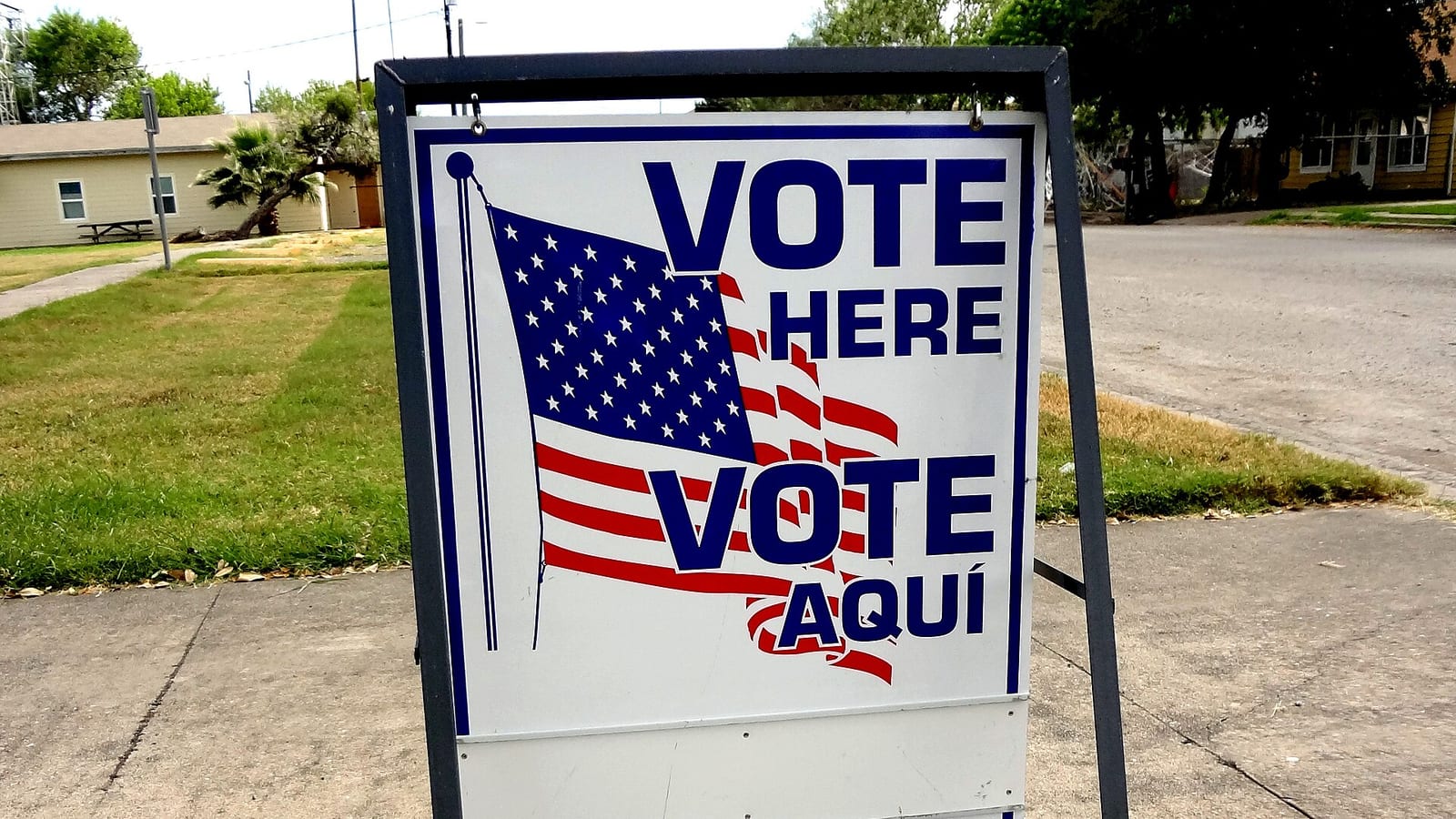
Texas early voting turnout reached 2,259,469 ballots in the first three days of voting for the November 3, 2026 general election, 2,149,865 of them cast in person from Monday, October 19 through Wednesday, October 21 and 109,604 by mail, according to county-by-county figures the Texas Secretary of State published on October 23, 2026. That is 11.87% of the state's 19,041,684 registered voters with seven days of early voting still to run. Over the same week the Texas Senate market moved toward James Talarico, the Democrat, and away from Ken Paxton, the Republican: the Republican contract went from 39% on both Kalshi and Polymarket on October 16 to 34% on Polymarket on October 23, 2026, which means traders now price Paxton's party at about one chance in three.
The Secretary of State's early-voting tables show the pace starting high and easing: 777,857 Texans voted in person on October 19, 719,230 on October 20 and 652,735 on October 21. The fourth day, October 22, was still incomplete in several large counties when the state updated its tables on October 23, so the three-day total is the one that holds. This is Texas's own election, and the U.S. Senate race heads the ballot: the state's qualified-candidate list names Paxton, whose listed occupation is attorney general, for the Republican Party, Talarico, a state representative, for the Democratic Party, and Ted Brown for the Libertarian Party, with write-in candidates beside them.
Where Texas voted first
The largest counties opened with the biggest numbers, as they always do, but two of them opened with numbers their own officials called records. The Secretary of State's tables put Harris County at 104,606 in-person voters on October 19, and the Harris County election office's first-day total of a little over 104,600 was, as FOX 26 Houston reported on October 21, 2026, above the county's previous first-day record for a midterm, 63,188 in 2018. Dallas County reported 77,829 in person on the first day in the state's tables; Dallas County Judge Clay Jenkins put the early count at 76,079 on the evening of October 19, which FOX 4 reported as the most the county has seen on a first day of early voting, above the 60,573 it reported in 2020. Travis County had 40,791.
By the end of October 21, Harris County had 324,497 ballots counting mail, 11.8% of its 2,746,177 registered voters. The faster pace was elsewhere among the big counties: Williamson County had 15.8% of its registered voters in, Denton County 14.3%, Dallas County 14.1%, Travis County 13.5%, Tarrant County 13.2% and Collin County 13.0%. The fifteen largest counties together were at 12.2% of their registered voters and the other 239 counties at 11.2%, as the counties had reported them by October 23, a gap of one point, which means the early vote is not a big-county story alone; the pace is close to even across the state.
Mail ballots are a small share so far. The 109,604 returned by October 21 were 4.9% of the three-day total, and Harris County accounted for 26,713 of them, about a quarter. In-person voting is carrying the early count, which matters for reading the daily tables: a county's in-person number on a given day is close to the whole of its early vote that day.
Two of those suburban counties anchor House seats this site follows. Williamson County holds 301,007 of the 766,987 people in the redrawn Texas 17th District, and Denton County holds 666,816 of the people in the Texas 26th District. Both seats are priced as Republican holds, and both pages name the midterm electorate in those counties as the thing that would test the read. The first three days do not settle that, but they put the two counties at the top of the state's turnout table.
What the Senate price did
On October 23, 2026, Kalshi had the Democratic Party winning the Texas Senate seat at 66%, against 67% on Polymarket, and Polymarket had the Republican Party at 34%, against 35% on Kalshi. On the evening of October 16, 2026, Kalshi had the Democratic side at 62% and Polymarket at 63%, and both venues had the Republican side at 39%. The Republican contract lost five points in a week and the Democratic contract gained four, which means the market now gives Paxton's party about one chance in three where a week earlier it gave a little better than that.
Both venues moved together, within a point of each other on both sides at both dates, so the shift is not one book drifting away from the other. The books are deep: Kalshi's Texas Senate series had traded about 37.6M contracts by October 23, 2026, and Polymarket's about $5.68M. A five-point move on a book that size is traders repricing the race, not a handful of orders.
The same week brought a new poll. The University of Houston's Hobby School of Public Affairs surveyed 2,000 likely voters from October 10 to October 14, 2026 and published a report this month that found Talarico at 48%, Paxton at 46%, Brown at 3% and 3% undecided, inside its margin of error of 2.19 points. The poll found Talarico viewed favorably by 47% and unfavorably by 50%, and Paxton favorably by 41% and unfavorably by 57%. A two-point lead in a poll is the same kind of lead the earlier polls this site covered had shown, which means the poll alone did not hand traders anything new; the move came in a week when the poll arrived and the early vote opened fast.
The price is the market's read, and the count is not a read at all. The Secretary of State's tables report how many people voted in each county, not for whom, and nothing in the 2,259,469 says which candidate those ballots favor. Traders who moved the Senate price between October 16 and October 23, 2026 were pricing the poll, the pace and their own sense of who is turning out, and the tables can confirm only the second.
What the count cannot say
The strongest argument against reading the turnout as good news for either side is the calendar. A fast start can be a front-loaded one, with the most eager voters on both sides going first, and the daily in-person count has fallen each day since October 19, from 777,857 to 652,735. A first-day record in Harris County and Dallas County says that voters in those counties were ready, not that the electorate on November 3 will look different from the polls. FOX 4 quoted John Taylor, chair of the University of Texas at San Antonio's political science department, on October 19, 2026 making a version of that point: voters may simply be ready to get it over with.
The second argument is the price itself. A 34% Republican contract on Polymarket on October 23, 2026 is not a long shot; it is a little better than one in three, in a race where the newest public poll shows a lead inside its margin of error. A reader who thinks the market got ahead of the evidence can point to the poll that arrived the same week, which found the race at 48% to 46% with 6% for a third-party candidate or undecided.
What comes next
The calendar is short and fixed. October 23, 2026 is the last day for a mail-ballot application to reach a county, under the Secretary of State's schedule. Early voting in person runs through Friday, October 30, and the state publishes each day's county totals the following day, so the turnout tables will show whether the pace holds through the second week or keeps easing. Election Day is Tuesday, November 3, 2026; a mail ballot counts if it arrives by 7 p.m. that day, or by 5 p.m. on November 4 if it is postmarked by 7 p.m. on election day.
For the Senate market, the read changes if the Republican contract climbs back above 39%, where it stood on October 16, before early voting ends, or if a poll taken after October 19 shows Paxton ahead. The Texas Senate market page carries the contract rules, the venues and what would change the read there. The previous story on Talarico's third-quarter fundraising covers the week before this one, when the Democratic price slipped a point, and the elections page lists every Texas race with a contract, including the governor's race on the same ballot.
Questions readers are asking
How many Texans have voted early in the 2026 general election?
The Texas Secretary of State counted 2,259,469 ballots in the first three days, October 19 to October 21, 2026: 2,149,865 in person and 109,604 by mail, or 11.87% of the 19,041,684 registered voters.
Did Harris County and Dallas County set early voting records?
Both counties reported first-day records on October 19, 2026. Harris County had about 104,600 in-person voters against a 2018 midterm record of 63,188, and Dallas County Judge Clay Jenkins reported 76,079, above the 60,573 of 2020.
What are the Texas Senate odds after the first week of early voting?
As of October 23, 2026, Kalshi had the Democratic Party at 66% and Polymarket had the Republican Party at 34%, against 62% and 39% on October 16, 2026, so the market moved toward Talarico during the week.
Does early voting turnout show who is winning in Texas?
No. The Secretary of State reports how many people voted in each county, not for whom, so the turnout tables carry no party or candidate information.
When does early voting end in Texas?
Early voting in person runs through Friday, October 30, 2026, and Election Day is Tuesday, November 3, 2026. October 23, 2026 is the last day for a mail-ballot application to be received.