StoryLocal news
The CFTC's Prediction Market Rule Reaches the White House as Texas Writes Its Own List of Banned Contracts
OMB logged the final rule on November 20, 2026, less than eight weeks before the Legislature convenes January 12, which means House Bill 598's age-21 floor and 12 banned contract types will be weighed against a federal standard that may already be set.
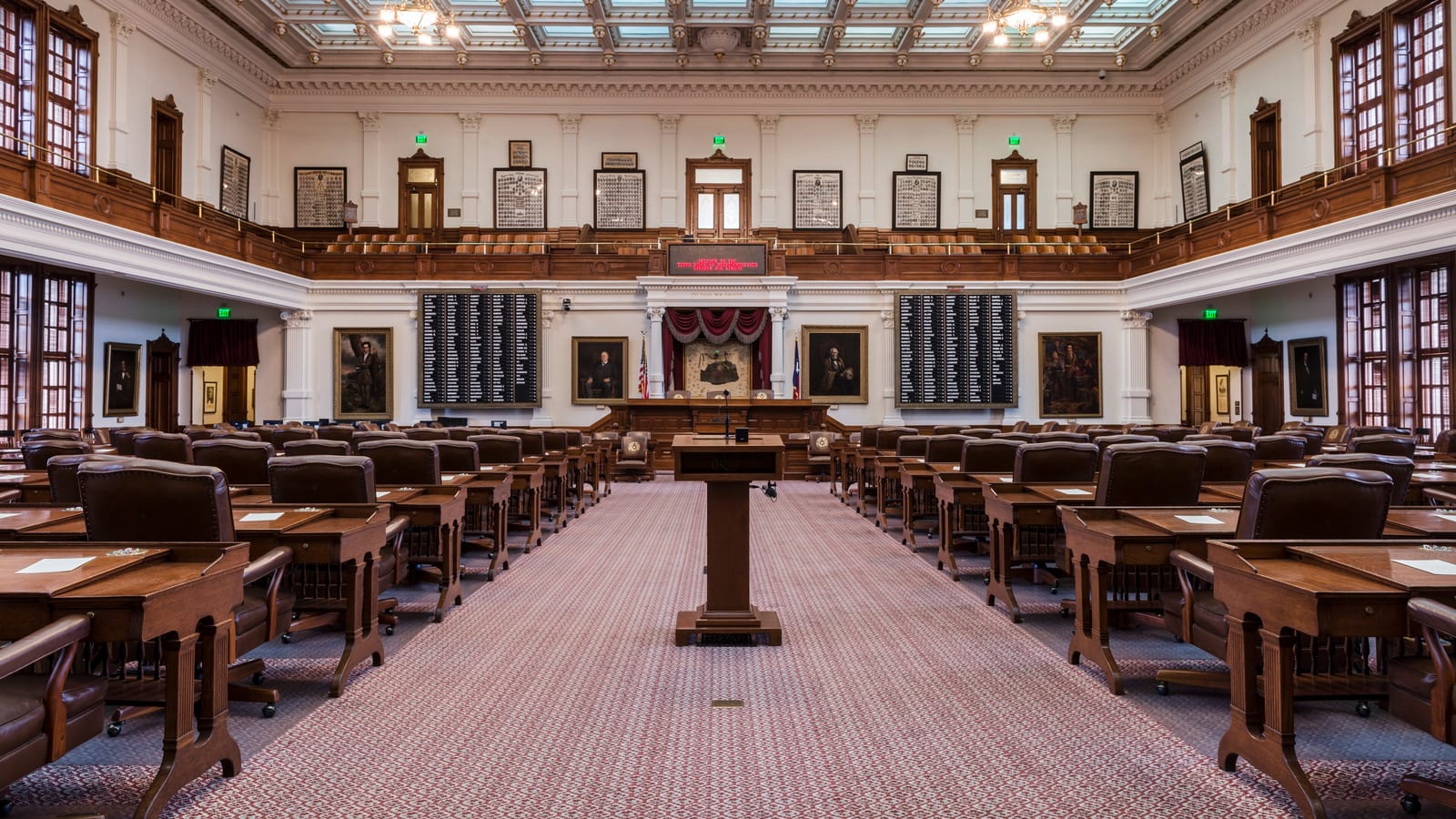
The CFTC prediction market rule that would decide which event contracts can trade nationwide reached the White House on November 20, 2026, and it arrives as Texas lawmakers line up their own answer. As of November 23, 2026, the Office of Management and Budget lists the Commodity Futures Trading Commission's final rule, "Prediction Markets; Public Interest Determinations," as pending review, while Texas House Bill 598, filed November 9 for the session that opens January 12, 2027, would bar a dozen kinds of event contracts for anyone physically in Texas and set a minimum trading age of 21.
The federal step is on OMB's public list of rules under Executive Order 12866 review: Regulation Identifier Number 3038-AF65, stage Final Rule, received November 20, with no legal deadline attached. Two other CFTC event-contract actions sit on the same list, a final rule on "Data Reporting Requirements for Certain Event Contracts" received October 20 and a proposed "Regulation Customer Protection and Identification" received November 2. Bloomberg News, which reported the review on November 23, said a CFTC spokesperson declined to comment and that it is not clear how a final rule will factor into the litigation between prediction markets, state regulators and tribal groups. No Texas court record naming a prediction market was located for the Texas legal status page. For Texas the question is concrete: its Penal Code makes the bet itself an offense, proposals to authorize sports wagering by constitutional amendment have been filed again, and the state has answered prediction markets through the Legislature rather than the courts.
What the June proposal said, and what it left out about Texas
The final text is not public, and nothing here describes it. What is public is the proposal the CFTC published in the Federal Register on June 12, 2026, whose comment period closed July 27. Bloomberg reported that it drew about 1,400 comments. The word "Texas" does not appear in it.
The proposal defines gaming for the Commission's special rule on event contracts as any activity that participants "typically engage in for purposes of recreation or to entertain others," that "is governed by rules," and whose outcomes "depend on the participants' luck, skill, or athletic ability during the activity." The Commission wrote that this reaches "all sports, including e-sports," so a Cowboys or Texans game is gaming under the proposed text. Political elections are not: the proposal says elections serve "the purpose of selecting political leadership, not recreation or entertainment," and it calls the Commission's earlier orders that treated election contracts as gaming incorrect. Under the proposed text, then, sports are inside the gaming category, and whether a sports contract may list turns on the public-interest factors that follow.
Being gaming is not the same as being barred. The proposal lists factors that "weigh heavily against" finding a sports contract contrary to the public interest when it settles on final scores, point differentials, win-loss results, tournament advancement or season-long statistics. It marks three kinds as likely contrary: contracts settling solely on an athlete's injury, on an official's call, or on a single discrete play such as one pitch or one shot. A contract on a Texans final score or a Texas team's season wins falls in the first group under that test; a contract on whether a named quarterback's injury keeps him out falls in the second.
Texas bans the bet; the proposal looks at the game
Texas Penal Code Section 47.02(a) makes it an offense to make "a bet on the partial or final result of a game or contest" and a bet "on the result of any political nomination, appointment, or election." The statute targets the wager. It says nothing about event contracts or federally designated exchanges.
The CFTC's proposal reads the federal phrase "activity that is unlawful under any Federal or State law" the other way around. The relevant question, it says, is whether the event a contract settles on occurs inside an unlawful activity, not whether trading the contract equals an act a state forbids. It rejects the reasoning of the Commission's 2023 order on election contracts, which had found that "betting or wagering on elections is prohibited by statute or common law in many states." Under the proposal's reading, a Texas election or a Cowboys game is a lawful event, so a state law against betting on it would not by itself place a contract on it in the unlawful-activity category. The proposal's preamble goes further, stating the Commission's view that the Commodity Exchange Act "expressly preempts state laws that attempt to regulate the operation of, or transactions on, CFTC-registered exchanges," while also saying its gaming definition "does not purport to interpret or displace any other federal or state statutory regime." Whether federal law displaces Section 47.02 for a designated exchange is a question for a court, and no Texas court or agency document located for the Texas legal status page has applied the statute to one.
House Bill 598 writes a different list
Rep. Salman Bhojani, a member of the Texas House since January 10, 2023, filed House Bill 598 on November 9, 2026. It would add a Chapter 623, "Prediction-Market Event Contracts," to the Business and Commerce Code and reach any operator that offers event contracts to "an individual physically located in this state, regardless of the location of the operator."
The bill's banned list is about harm, not games. It would bar contracts contingent on criminal investigations and proceedings, death sentences and clemency, pending civil cases, a person's death, injury, illness or health status, suicide and overdose, assassination and kidnapping, terrorism and mass shootings, war and weapons of mass destruction, disaster casualties and outages, epidemics, and immigration arrests and deportations. Sports results and elections are not on it. Operators would have to geolocate Texas users, verify that each is at least 21 with a commercial age check rather than a typed birth date, and keep advertising away from schools and audiences under 21. The Attorney General could sue for civil penalties of up to $10,000 per violation, or $25,000 for each underage trader. The bill says it does not "authorize, legalize, or license gambling, sports wagering, or other conduct prohibited by Chapter 47," imposes no liability on a person trading for their own account, and applies "to the maximum extent permitted by the United States Constitution and the laws of the United States." It would take effect September 1, 2027.
Two lists now point at the same contracts from different sides. The CFTC proposal's likely-contrary group starts from injury, officiating and single plays; HB 598 starts from crime, death, violence and disaster, and its item on an individual's serious bodily injury, illness or medical condition covers some of the same ground as the federal injury factor. Where the two overlap, the federal rule would govern what an exchange may list at all; the Texas bill would govern what an operator may show a Texan, to the extent federal law allows it, which is the phrase the bill itself uses.
As of November 23, 2026, HB 598 is the only bill filed for the 90th Legislature whose caption names prediction markets or event contracts. The rest of the early gambling docket is about legalizing, not restricting: Senate Joint Resolution 11 and House Joint Resolution 52 propose constitutional amendments to authorize casino gaming and sports wagering, Senate Joint Resolutions 12 and 13 concern gaming by the Kickapoo Traditional Tribe of Texas, and House Bill 1031 would make prizes in paid fantasy sports leagues a bet under Section 47.01.
Where the Senate study and the state coalitions stand
The Legislature's interest predates the bills. Lieutenant Governor Dan Patrick's interim charges of March 27, 2026 told the Senate Committee on State Affairs to study "the sudden inundation of prediction market gambling and the exploitation of federal law to circumvent Texas gambling prohibitions," and to "examine the relationship between federally regulated derivative markets and state-prohibited gambling." That relationship is exactly what the CFTC rule addresses. The committee heard the charge on September 15, 2026, with Kalshi's head of enforcement among the invited witnesses, and its meetings list shows no hearing since.
Texas is absent from the two multistate filings whose signature pages are public. On November 18, 2026, Ohio and 42 other states plus the District of Columbia asked the CFTC to withdraw a separate proposal that would treat event contracts as swaps, arguing that "sports bets are not derivatives subject to the CFTC's jurisdiction." Texas is not among the signatories. Nor was it among the 38 states and the District of Columbia that filed an amicus brief for Maryland's officials in KalshiEX LLC v. Martin in the Fourth Circuit on December 22, 2025; that brief's one mention of Texas lists it among states that "have kept sports betting illegal." The Attorney General's news releases through November 23, 2026 name no prediction market. Texas's response has come through the Capitol. The CFTC's November 5 guidance telling exchanges not to limit access by state, covered in this site's earlier story on that guidance, sits on the other side of the same question.
What happens next
OMB has no deadline on its list for finishing the review. The June proposal said its amendments would take effect 60 days after a final rule is published in the Federal Register, so the earliest effective date depends on a publication date that has not been set. Before then, December 5, 2026 closes the 30 days the CFTC gave exchanges on November 5 to drop domestic geographic restrictions or explain why they cannot; that interpretation was published in the Federal Register and took effect on November 10. The Legislature convenes at noon on January 12, 2027, under Government Code Section 301.001, the first session in which HB 598 and the joint resolutions can move. The Texas legal status page tracks each document as it is published.
Questions readers are asking
What did the CFTC send to the White House on November 20, 2026?
Its final rule titled Prediction Markets; Public Interest Determinations, RIN 3038-AF65, which the Office of Management and Budget lists as received November 20, 2026 and pending review with no legal deadline; the final text has not been published.
Does the CFTC rule make sports prediction markets legal in Texas?
No such conclusion can be drawn: the June 12, 2026 proposal says its gaming definition does not interpret or displace any state statutory regime, Texas Penal Code Section 47.02 still makes betting on a game or an election an offense, and how the two fit is a question for courts.
What would Texas House Bill 598 do to prediction markets?
Filed November 9, 2026 by Rep. Salman Bhojani, it would bar 12 categories of event contracts for anyone physically in Texas, require geolocation and age verification at 21, limit advertising, and let the Attorney General seek civil penalties of up to $10,000 per violation, starting September 1, 2027.
Has Texas joined the states challenging the CFTC over prediction markets?
No. Texas is not among the 43 states and the District of Columbia on the November 18, 2026 comment asking the CFTC to withdraw its swap-definition proposal, nor among the signatories of the December 22, 2025 states' amicus brief in KalshiEX LLC v. Martin.
When will Texas lawmakers take up prediction market bills?
The 90th Legislature convenes at noon on January 12, 2027, under Government Code Section 301.001; House Bill 598 and the sports wagering joint resolutions filed in November 2026 can move only once the session opens.